
- Commissioner’s statement on Ventura, Marte
- Ronnie O’Sullivan: Masters champion ‘felt so vulnerable’ in final
- Arron Fletcher Wins 2017 WSOP International Circuit Marrakech Main Event ($140,224)
- Smith challenges Warner to go big in India
- Moncada No. 1 on MLB Pipeline’s Top 10 2B Prospects list
- Braves land 2 on MLB Pipeline’s Top 10 2B Prospects list
- Kingery makes MLB Pipeline’s Top 10 2B Prospects list
- New Zealand wrap up 2-0 after Bangladesh implosion
- Mathews, Pradeep, Gunathilaka to return to Sri Lanka
- Elliott hopes for rain for Poli
New laws for the PL season
- Updated: July 27, 2016
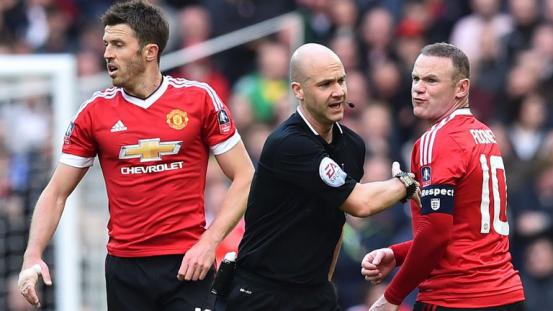
A number of new laws will come into force for the first time in the Premier League when the season kicks off on August 13…
The International Football Association Board (IFAB) announced more than 95 alterations to the laws of the game last season after 18 months of consultation, with many of the changes trialled at Euro 2016.
Here’s an overview of some of the major amendments…
CHANGE 1: Kick-off
As seen at Euro 2016, the ball no longer has to go forward at kick-off. The previous law stated the ball had to go into the opposition half at the restart, but it has been changed to allow it to move in any direction, as long as it “clearly moves”. This change has paved the way for one-man kick-offs, as seen at Euro 2016.
CHANGE 2: Pre-match red cards
Referees will be able to give a player a red card before the match kicks off. This allows officials to punish red-card offences (e.g. violent conduct) in the warm-up or as the two teams line up in the tunnel. The new law states a player may be sent off any time between the pre-match inspection and when the referee leaves the field at the end of the game.
CHANGE 3: An end to the ‘triple-punishment law’
The previous ‘triple-punishment’ law meant a player who denied a goal-scoring opportunity in the box was automatically red-carded and handed a suspension, as well as giving away a penalty.
The law has now been changed so players committing accidental fouls that deny goal-scoring opportunities in the penalty area will not be automatically sent off, with a yellow card sufficient punishment.
As the amendment states: “When a denial of a goalscoring opportunity offence is committed by a defender in the penalty area, the penalty kick effectively restores the goalscoring opportunity so the punishment for the player should be less strong (e.g. a yellow card) than when the offence is committed outside the penalty area. However, when the offence is handball or clearly not a genuine attempt to play or challenge for the ball, the …
continue reading in source www.skysports.com